Solar Curtailment
In South Australia, rooftop solar is the biggest electricity generator in the State.
South Australia has taken a range of steps to ensure customers can continue to install and benefit from solar, without putting the energy system at risk.
One of these safeguards is known as solar curtailment. If it appears the electricity network is at risk of becoming unstable, the independent Australian Energy Market Operator (AEMO) may – as a last resort - direct SA Power Networks to reduce solar exports.
What is solar curtailment?
Solar curtailment is the intentional reduction of solar power generated and exported to the network. It is a last resort after AEMO has used all of its other available options.
Why do we need solar curtailment?
Electricity needs to be consumed as soon as it is generated. That might be through the use of household appliances, industrial equipment or by charging a battery. If lots of solar energy is exported back into the network when there is low energy demand, there may not be anywhere for the electricity generated to be consumed. This mismatch between supply and demand can trigger unplanned outages.
SA Power Networks continues to deliver world-leading customer innovations – like Flexible Exports – to help enable uncongested energy flows.
Therefore, the need for solar curtailment is rare, but we still need to be prepared, particularly on mild, sunny days when there is a lot of solar energy being generated, but not much demand.
How is solar curtailment applied?
AEMO monitors grid stability at a national level. For South Australia, the interconnector sharing power between us and Victoria is critical to reducing widespread outages. But if there’s a risk of instability, we may be directed by AEMO to act.
As of September 2020, all solar inverters installed in South Australia were required to have the ability to be turned off remotely.
If AEMO directs us to curtail solar exports, these are the steps we might take:
- Turn off large-scale solar and wind farms.
- Turn off large-scale solar systems such as shopping centres and factories.
- Turn off the exporting or generation of home rooftop solar using the regulated Relevant Agent and Dynamic Export functions.
- Turn off any remaining rooftop solar by causing systems to trip off using our Emergency Voltage Management (EVM) function.
Which steps we take, and in which order, will be determined by system conditions, with a focus on minimising customer impacts. You are unlikely to notice if your solar is curtailed. We have systems in place to confirm when it has successfully come back online. If you’re concerned that your system has not come back on, or if you are unsure, contact your solar installer or inverter manufacturer.
Your solar installer can also advise whether your system is set up to be able to still power your own home while disconnected from the grid.
Will I ever be asked to turn my own system off?
This might occur in very limited circumstances. Find more information on how to switch off your solar PV system.
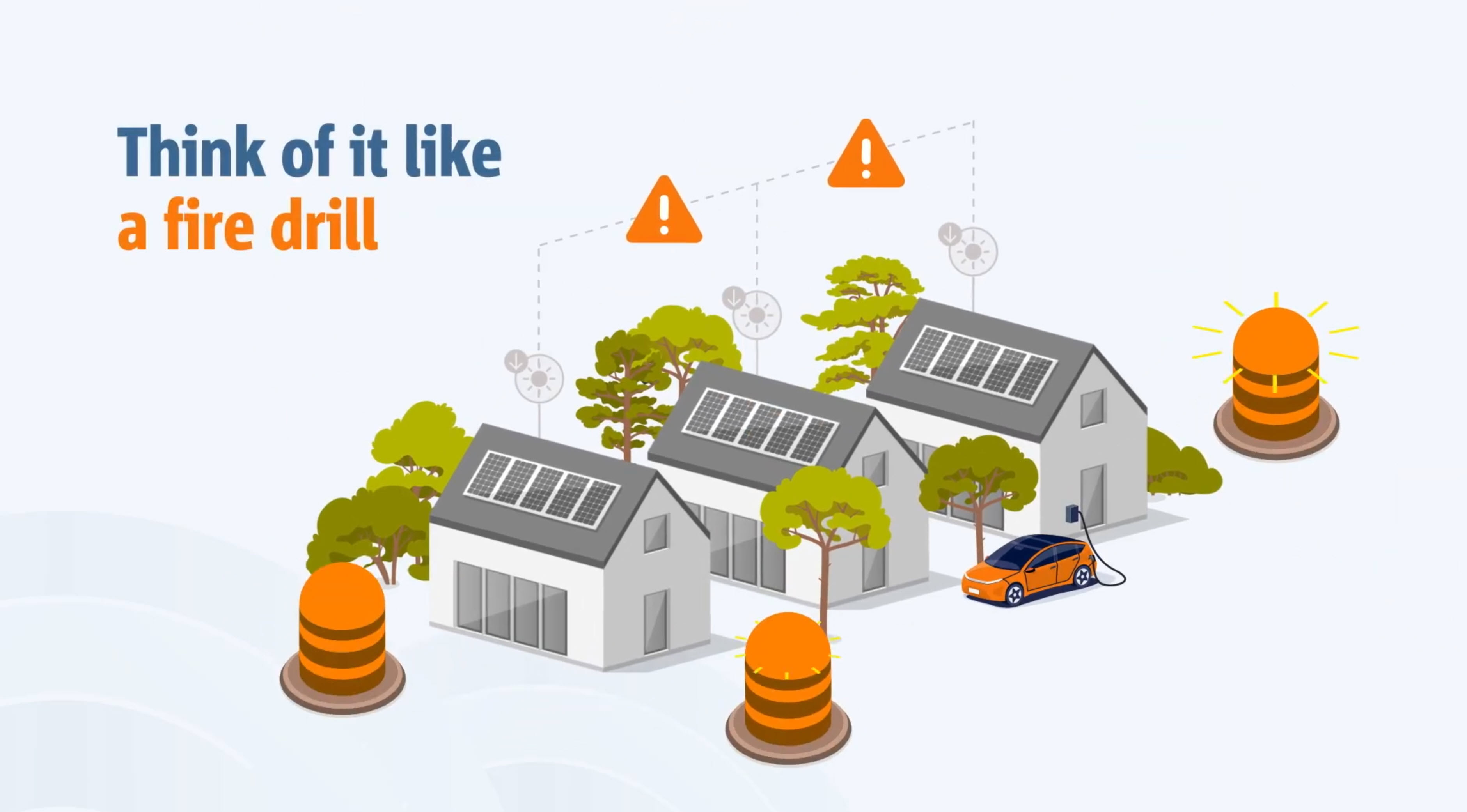
Annual Smarter Homes solar curtailment fire drill test
View the video below to learn more about the annual Smarter Homes solar curtailment fire drill test.