Have a Power Outage Plan
Power outages can occur at any time of the year – we recommend always having a power outage plan and keeping it up to date.
Reasons you may lose power
Unplanned outages caused by extreme weather – like storms, heatwaves or bushfires - or by other unexpected incidents which can impact power infrastructure. There are also planned outages scheduled by us, so that our crews can safely undertake essential work to maintain or upgrade the electricity network.
On days of elevated fire conditions, such as Total Fire Ban days, safety settings might be used on the network. Those settings make the network more sensitive to momentary impacts, meaning that a very brief outage - which would usually restore automatically - may instead be longer, until our crews have inspected the network and we determine that it’s safe for power to be restored.
On very rare occasions, we may need to take pre-emptive steps to turn the power off due to bushfire risk. These measures are only used as a last resort, but they are a critical option to help protect lives and property.
Sometimes we need to temporarily interrupt your power supply to safely do work on the network.
We will notify you at least four business days in advance with the date, and approximate start and finish times. The notification will either be by SMS, email or letter.
We'll send you a reminder SMS the day before the planned interruption.
To prepare, it’s a good idea to:
- Charge your mobile devices, laptops and any portable batteries.
- If you're at home, leave a light on to tell you when the power is back on.
- Unplug or power down appliances and sensitive electronic equipment to help prevent damage. Commercial businesses or body corporates should consider switching off lifts, water pumps, and similar systems.
- You do not need to switch off or adjust any solar installation.
- If you have a monitored security system, let your provider know.
Our work to minimise outage impacts
We work closely with emergency services throughout the year to prepare the network for extreme conditions. That work includes:
- Clearing trees and vegetation near powerlines
- Inspecting poles and wires, especially in bushfire-risk areas
- Upgrading and maintaining equipment to help make sure it can withstand severe conditions
When you create your power outage plan, you make the network.
Here are some ways you can prepare too
Although we work hard to keep power on, or restore it when it goes out, we don’t want you to be caught off guard:
- Sign up for outage notifications. You can register more than one mobile number or email address for your home or business.
- If you are a life support customer develop your life support outage plan
- Keep a torch or low volt portable light and spare batteries
- Know how to use the manual override on electric gates or garage doors
- In the event of an outage, keep your fridge and freezer doors closed
These are just a few examples - every customer will have unique needs. So, we recommend that you use this online resource to prepare the right Power Outage Plan for you.
Keep a copy easily at hand and review and update it regularly.
You can find more advice at Check. Plan. Do. Power Outage Plan.
If an unexpected outage occurs, you can help us by reporting it online.
If extreme conditions bring wires down, please understand that for wires down safety you must stay at least 10 metres clear and call us immediately on 13 13 66.
FAQs
See the FAQs below for helpful information and common questions about power outages.
Your internet and nbn won’t work during a power interruption unless you have a battery backup. Mobile coverage may also be impacted.
Try to keep the doors closed to maintain the cold temperature. Refer to SA Health advice for outages which last more than four hours.
Crews might be working in a nearby street or on another part of the network that isn’t visible from your property. If the job is cancelled, we’ll do our best to let the primary account holder know via SMS/email.
Not always. In some cases, work finishes ahead of schedule, and power is restored sooner than expected. Sometimes unexpected issues can cause delays, which may mean power is restored later than planned. We do our best to minimise disruption and aim to stay within the advised timeframe.
The scheduled time includes preparation and safety checks before work begins. Depending on your location on the network and how the work progresses, some properties may be disconnected later than others.
Sometimes planned interruptions need to be cancelled at short notice due to things like bad weather, network emergencies, or resourcing issues. If that happens, the interruption may be rescheduled, and you’ll be notified with at least four business days’ notice.
Planned interruptions are allowed under national energy laws. Because customers are notified in advance to prepare, compensation is not provided.
These times are sometimes selected due to road permits, safety requirements, or to help reduce the impact during peak demand periods. While most planned interruptions happen during the day, some situations may require work to be done after hours.
No, SA Power Networks does not provide or reimburse the cost of generators. If you choose to use your own, please make sure to follow all relevant safety guidelines.
No, your solar system does not need to be adjusted before or during a planned interruption.
Not all home batteries are capable of supplying power to your home while the network is off.
If you are unsure about whether your battery has backup functionality, contact the installer as they will know the most about the battery's capabilities and how it was installed.
If you know your battery does have backup functionality, consider charging it before a planned outage and reducing your electricity use during the outage to help the stored energy last longer.
Once power is restored, your system should continue operating as normal. If your system does not resume as expected, contact your installer for support.
Bushfire Protection Settings
If you live in a high bushfire risk area, make sure that having a power outage plan is part of your bushfire action plan. You'll find more information on our Bushfire Safety page.
It’s important to know that extreme or prolonged hot weather can interrupt your power supply. And a bushfire could impact your supply even if it is burning some distance away.
On days of which have elevated fire conditions, such as Total Fire Ban days, we might put the network into bushfire protection settings. This is like turning up the sensitivity of the system.
Normally, if a branch or animal touches a line, the network may briefly switch off and back on - so customers barely notice. With protection settings on, however, the power stays off until our crews inspect the lines to confirm it’s safe. This reduces the risk of a fire starting, but can mean that a fault which would usually go unnoticed results in a longer outage.
While these outages are inconvenient, they are a necessary trade-off to protect lives, property, and the community.
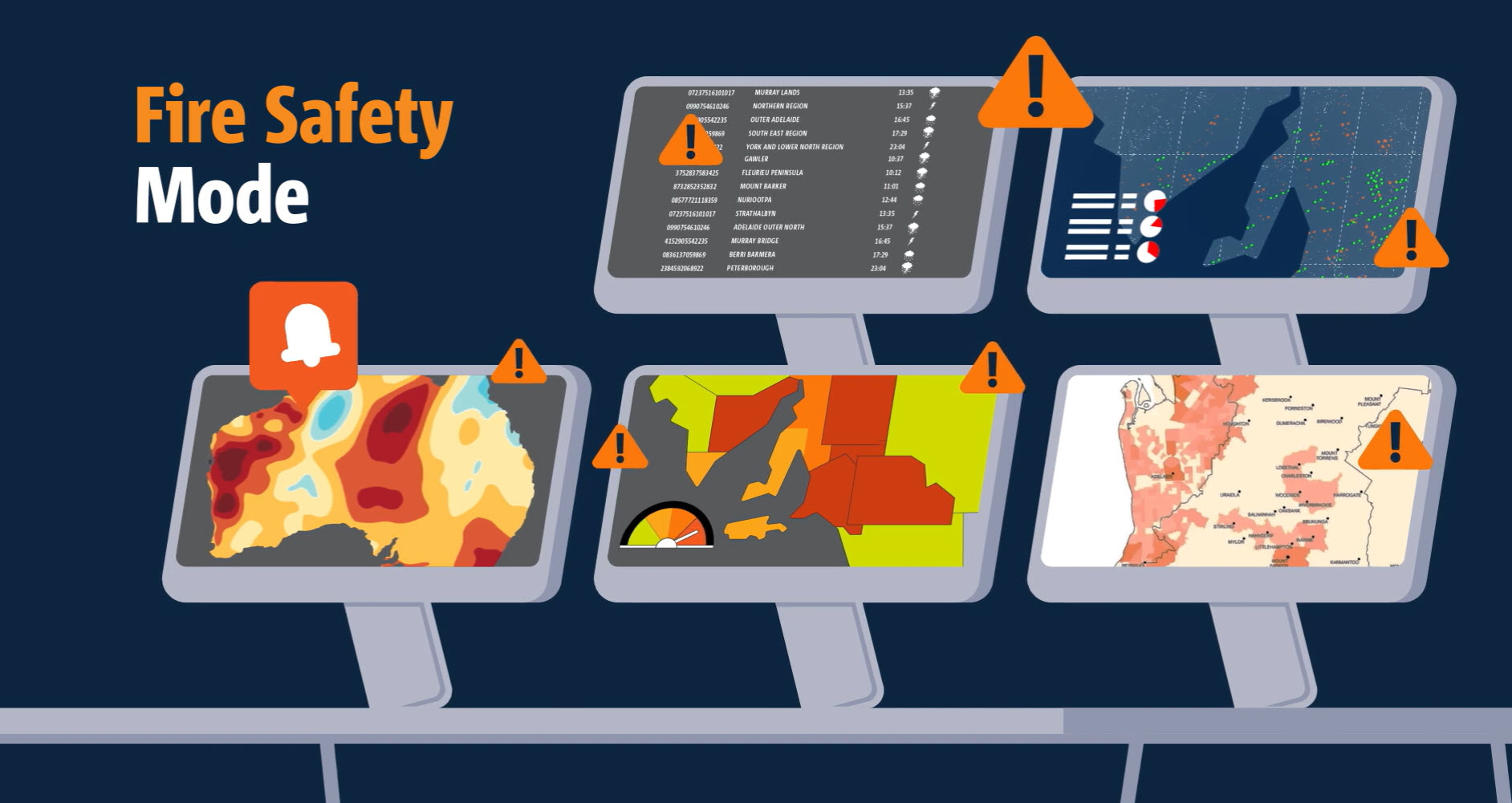
Power disconnections – a last resort
Completely switching off power to an area to help reduce the risk of fires starting is rare and only used as last resort to protect lives, property, and the community in situations where windspeeds are very high and there is extreme fire risk.
Disconnections are limited to designated bushfire-risk areas, as set out in the Electricity Act 1996.