Our Vegetation Clearance Program
SA Power Networks is legally required to inspect and clear vegetation around powerlines at regular intervals, no more than every three years, in both bushfire and non-bushfire risk areas.
Why is clearing vegetation around powerlines important?
Trimming trees and branches near powerlines is essential for:
- Reducing the risk of bushfires
- Improving community safety
- Maintaining reliable power supply
- Meeting legal obligations
Vegetation management near powerlines video
Meet Trev the Tree and Stan the Stobie. Trev is keen to explain how SA Power Networks manages him and his mates around powerlines to ensure the community stays safe, you have a reliable power supply, and we minimise our bushfire risk.
Steps in our Vegetation Clearance Program
Expand each section below to learn more about the steps involved in our vegetation clearance program.
We inspect vegetation every 1–3 years, depending on the bushfire risk classification of the area. You can check the bushfire risk classification for your location by visiting the Location SA Viewer and selecting the Electricity Regulations Boundaries to view.
If you’d like to receive SMS or email notifications before inspections begin in your area, you can sign up for updates.
For properties with specific access requirements, such as locked gates, dogs on the property or difficult terrain, please contact:
- Active Tree Services: 1300 130 287
- SA Power Networks: 13 12 61
- Email: customerservice@sapowernetworks.com.au
We will notify you before planned vegetation clearance near powerlines is to be undertaken. However, in emergencies—such as a tree causing a hazard, severe storms or extreme weather damage—we may need to act immediately without notice to ensure the safety of the network and community.
Under the Electricity Act 1996, SA Power Networks has the legal right to enter private property to perform necessary vegetation management.
Learn more about times when SA Power Networks may need to access your property.
If vegetation clearance is required on your property, you will receive written notification.
This notice is issued under Section 57 of the Electricity Act 1996, which ensures vegetation meets legislated safety clearances.
What does this notice mean?
Why you’ve received it
Vegetation near powerlines on your property has been assessed and requires trimming or removal to maintain safety clearance distances and prevent risks such as electric shock, fire, or power outages.
What happens next
SA Power Networks, through our contractor Active Tree Services, will enter your property to carry out the necessary work. This will occur within 120 days of the notice being issued, following an initial 30-day period.
Who pays for the work
There is no cost to you for vegetation clearance and tree trimming near powerlines. However, you are responsible for maintaining clearance around private supply lines on your property.
Key points to know
- The person living at a private property – including tenants - must keep clearance zones free of vegetation planted around their private supply lines.
- This also applies if tree branches and vegetation overhang the clearance zones from neighbouring land.
- If a property isn’t occupied, the owner is responsible.
- This work is carried out to meet safety and legal requirements under the Electricity Act 1996.
- If you have specific access requirements (e.g. dogs on property or locked gates), please contact Active Tree Services on 1300 130 287.
- You can provide feedback on our Vegetation Management Program via our online vegetation management feedback survey.
- If you have concerns or objections, you can contact SA Power Networks on 13 12 61 or the Office of the Technical Regulator (OTR) within 21 days of receiving the notice.
-
If you want to find out more about working safely near overhead powerlines, visit Working and Building Around Electricity Infrastructure.
The required clearance distance between trees and powerlines is determined by legislation under the Electricity (Principles of Vegetation Clearance) Regulations 2021.
Our trained vegetation crews trim what is required to meet these rules and ensure community safety.
We may also conduct inspections through aerial or ground patrol to visually assess the condition of our assets and vegetation that has the potential to bend or grow near powerlines, including in an emergency or after an event that has caused interruption of supply.
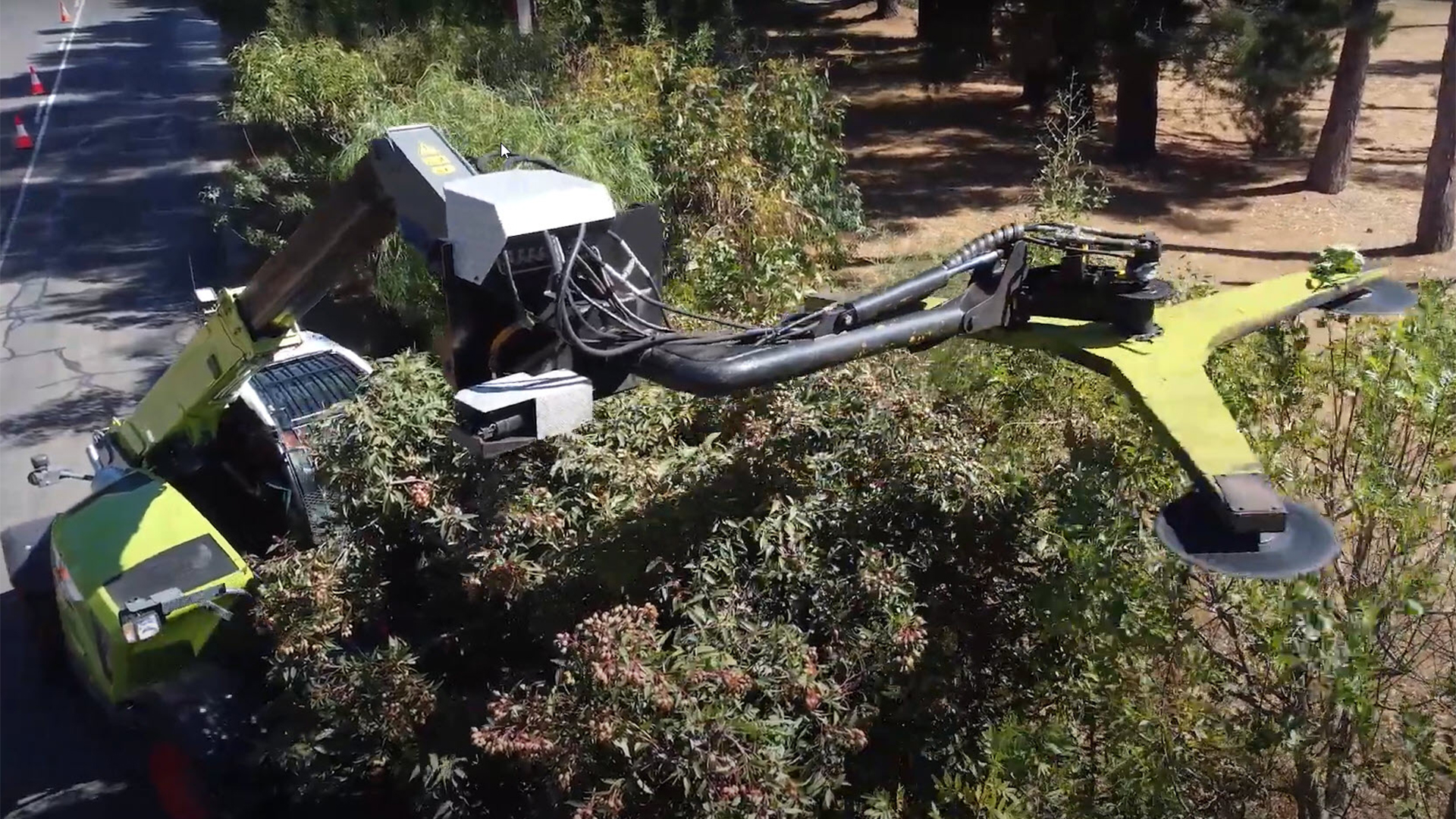
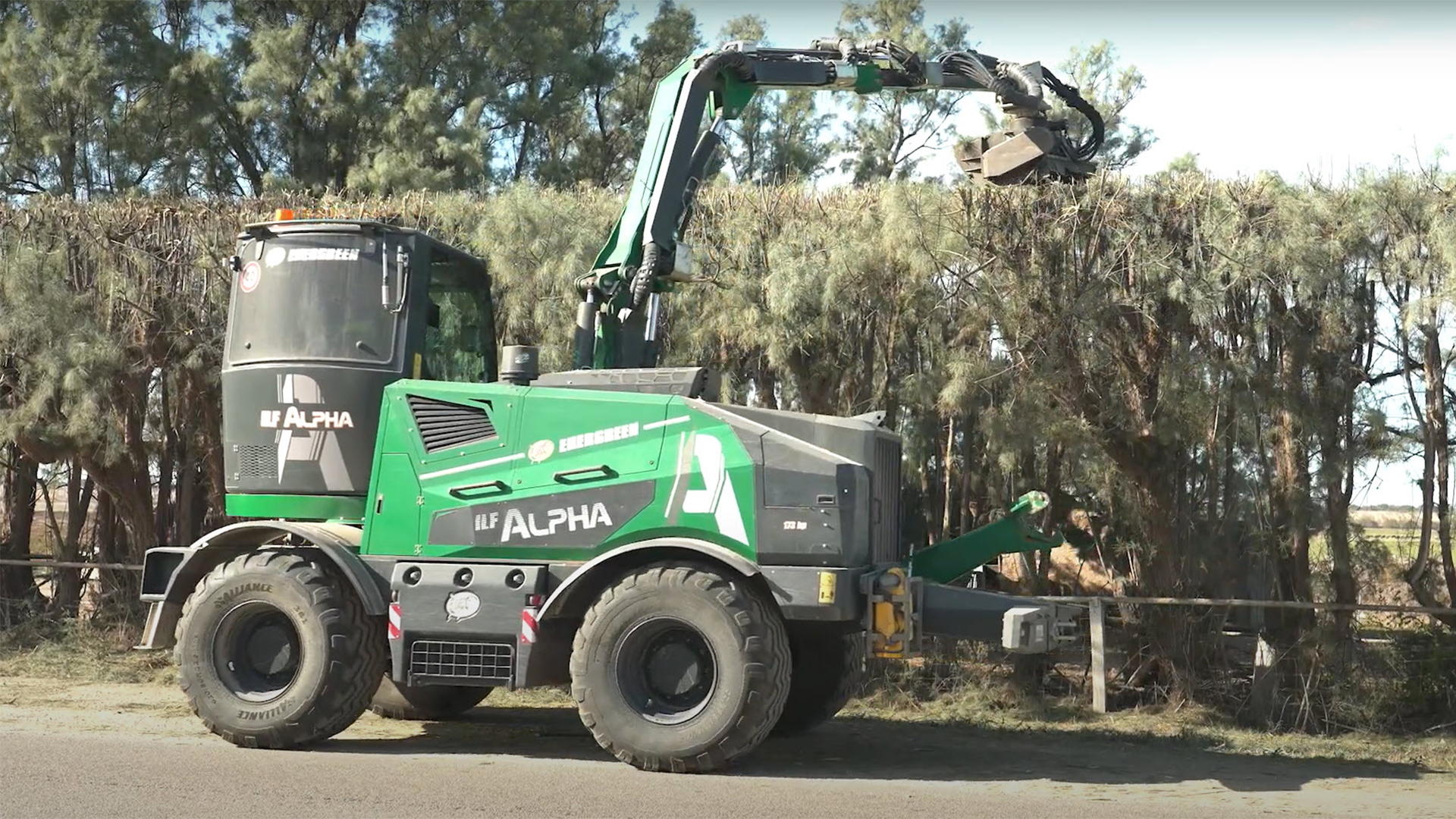
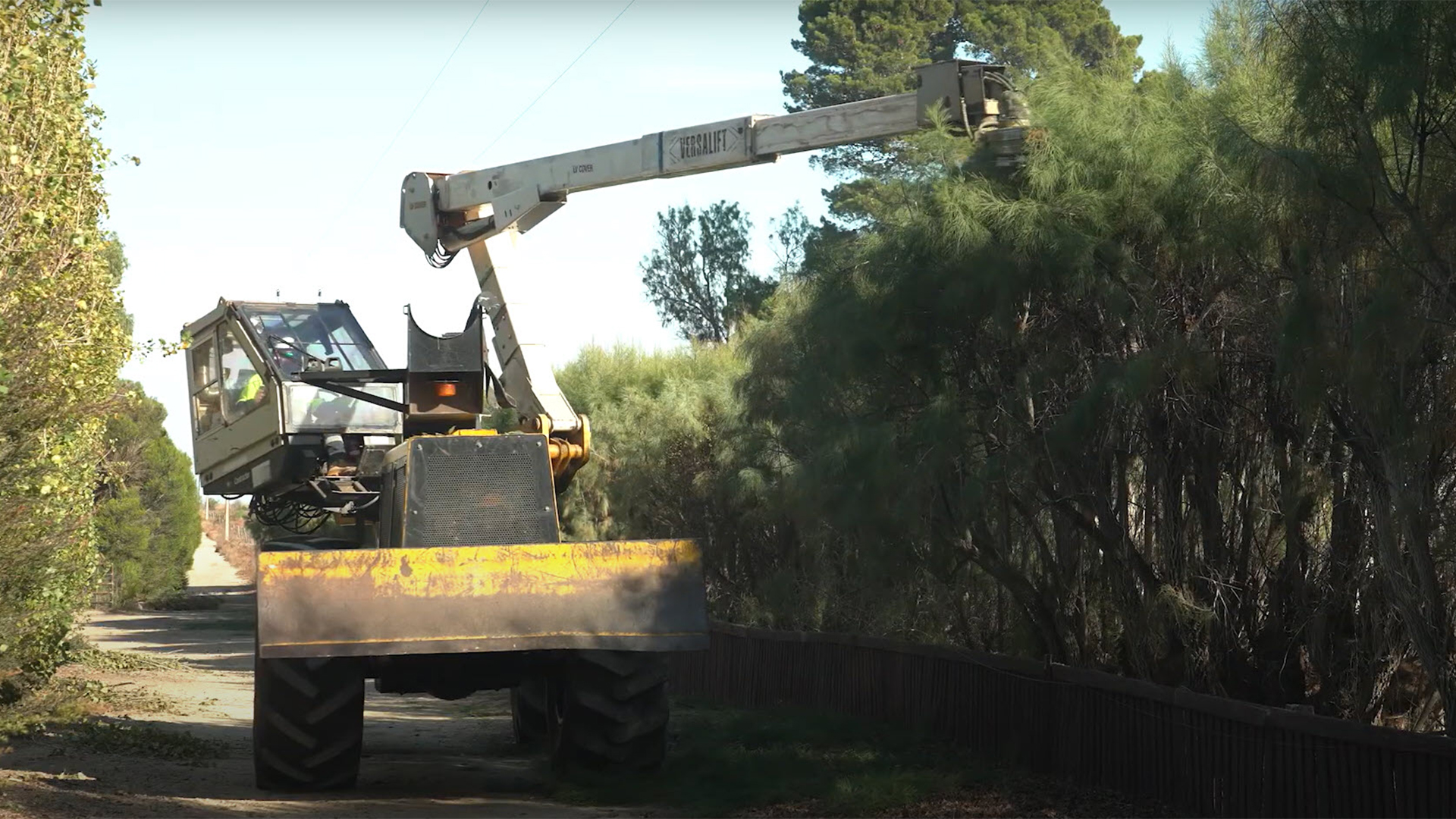
Active Tree Services may use mechanical aids to trim vegetation. You can see these in action via the video links further down the page below.
Our crew members remove debris within five business days of trimming being completed. In special circumstances, we’ll speak to you before leaving debris behind.
Our tree trimming contractors
Active Tree Services (ATS) works on behalf of SA Power Networks to help us meet vegetation clearance requirements.
Active Tree Services uses mechanical trimming aids to increase the safety and efficiency of the vegetation management program. You might see the vehicles below operating on our network across South Australia.
You can find out more about Active Tree Services at their website.
Trees and powerlines frequently asked questions (FAQs)
Find a list of frequently asked questions and answers below.
It is a legal requirement that a safe clearance distance is maintained between vegetation and powerlines. This helps to reduce bushfire risks, prevent outages and maintain community safety.
The distance trees must be kept from powerlines is determined by legislation, the Electricity (Principles of Vegetation Clearance) Regulations 2021. Our trained vegetation crews trim what is needed to meet these requirements.
A clearance zone is the minimum safe distance between vegetation and powerlines. It allows the powerlines and trees to sway in windy conditions safely without causing damage or starting fires. It is a legal requirement for the clearance zone to be free of vegetation.
A buffer zone is an additional safety margin around the clearance zone near powerlines. It is designed to account for factors like tree regrowth, movement of vegetation in the wind, and environmental conditions. The buffer zone provides extra space to ensure ongoing safety and reliability until the next scheduled maintenance. This reduces the risk of vegetation encroaching into the clearance zone over time.
Inspections are completed every 1–3 years, depending on whether it is a bushfire risk area or a non-bushfire risk area. We inspect and complete powerline tree trimming at least once per year in bushfire risk areas.
We may also conduct inspections through aerial or ground patrols to visually assess the condition of our assets and vegetation that has the potential to bend or grow near powerlines, including in an emergency or after an event that has caused interruption of supply.
You can find out more about your property by visiting Location SA Viewer and selecting the Electricity Regulations Boundaries to view.
We will notify you before planned vegetation clearance near powerlines is to be undertaken. However, in emergencies—such as a tree causing a hazard, severe storms, or extreme weather damage—we may need to act immediately without notice to ensure the safety of the network and community.
If you’d like to receive SMS or email notifications before inspections begin in your area, you can sign up for updates.
For properties with specific access requirements, such as locked gates, dogs on the property or difficult terrain, please contact:
- Active Tree Services: 1300 130 287
- SA Power Networks: 13 12 61
- Or email us at customerservice@sapowernetworks.com.au
All vegetation clearance is carried out by qualified contractors acting on behalf of SA Power Networks, who follow government regulations.
Our crew members remove debris within 5 business days of trimming being completed. In special circumstances, we’ll speak with you before leaving it behind.
Vegetation inspectors working with SA Power Networks are required to hold (or be working towards) a Certificate II in Powerline Vegetation Control.
Vegetation clearance crews receive training in safe clearance techniques and safe working near powerline practices. Highly qualified supervisors are engaged to audit and provide advice and training to ensure safe and compliant practices.
If you would like to provide feedback on our Vegetation Management Program, you can access an online Vegetation Management Feedback Survey.
Undergrounding is sometimes possible, but it is very expensive and largely cost prohibitive, especially across large rural networks. Vegetation clearance near powerlines remains the most effective and affordable way to manage vegetation and the distribution network.
By law, trees must be kept clear of powerlines. If you refuse access, we may still be required to carry out the work for community safety and reliability.
The electricity network operator has to give the occupier 30 days' notice prior to commencing vegetation clearance on private property.
Emergency clearances are exempt from this requirement.
Any objection to the proposed clearance should be discussed with the electricity network operator. If the objection is unresolved, you may contact the Office of the Technical Regulator for further clarification.
Yes. Our crews follow strict environmental guidelines and, where possible, avoid disturbing birds, possums and other wildlife. All vegetation types, including native species, are scoped and trimmed when required to maintain community safety and reliability.
In order to improve community safety and reduce the need for future tree trimming, SA Power Networks can remove saplings and woody weeds, as outlined in legislation governed by the Office of the Technical Regulator.
We are required to comply with native vegetation legislation, and other removals are determined on a case-by-case basis in consultation with councils or landowners.
We make sure pruning is only undertaken where necessary to achieve the required clearances. In addition to the minimum clearance distance, a growth allowance (known as a buffer) may also be applied to accommodate expected regrowth between inspection cycles.
Our requirements are administered by the Office of the Technical Regulator to reduce the risk of vegetation contacting powerlines and potentially causing a fire. We have a legal requirement to ensure community safety and protect network reliability.
The Office of the Technical Regulator has a List of Approved and Permitted Trees that can be planted near powerlines and are less likely to conflict with electricity infrastructure, providing a better long-term outcome for streetscapes.
Residents concerned about the appearance of street trees can speak with their local council.
FAQs relating to Adelaide metropolitan area
Branches near powerlines can cause sparks, fires or outages no matter where they are. Maintaining clearance distances keeps the community, our workers and the distribution network safe. There are different clearance distance requirements for high voltage and low voltage powerlines in metro areas, with some trees allowed to grow safely through low voltage powerlines only.
Different trees grow at different rates. Some areas also have higher safety requirements depending on local conditions and when the trees were planted.
Yes. We coordinate and work in partnership with councils to make sure street trees are managed consistently.
Responsibility depends on whether the tree is on public land, council land or private property. We manage the safety clearance around the powerline, but ownership of the tree remains with the council or landholder. Read more about Responsibilities around tree trimming and planting.
FAQs relating to regional and rural areas
Regional networks cover long distances through bushfire-prone areas. Keeping vegetation well clear of lines is critical for community safety, bushfire prevention and preventing outages.
We aim to minimise impacts, but safety comes first. If you have concerns, please discuss them with our crew members on-site or contact us before trimming begins.
If damage occurs during our work, we will attempt to repair the damage. Please contact us as soon as possible so we can resolve any issues.
There are limitations regarding the type and location of trees and vegetation you can plant near powerlines.
You can access a list of permitted and approved trees via the Office of the Technical Regulator List of Approved and Permitted Trees.
Share your feedback
To provide feedback on how we manage vegetation around powerlines, or your recent experience on tree trimming, you are invited to complete our online survey. Your feedback will help us to continue to improve this service.
Please call 13 12 61 or email our customer service team for more information about our Vegetation Management Program.