Background
Insulator pollution emerged as an issue in summer 2024/25 and has re-emerged at scale in 2025/26, primarily affecting coastal and regional areas, including the Yorke Peninsula, Eyre Peninsula, Limestone Coast, Lower Murray and Kangaroo Island.
Our emergency operational response is now easing following an extensive washing and replacement program, and significant rainfall in late February. But the issue remains an operational priority, and we will continue work to reduce the likelihood of similar outages in future summers.
What is insulator pollution?
Insulator pollution is a weather-driven, system-wide reliability issue.
Insulators are essential components of the power grid that support and isolate electrical conductors. They are designed to prevent electricity from flowing to the ground. Over time, particularly during prolonged dry periods without washing rains, insulators – especially in rural and coastal areas - can become coated with dirt, salt, or other contaminants.
When combined with moisture such as dew, mist, light rain or high humidity, this pollution build-up can create a conductive path along the surface of the insulator. This can reduce the insulating performance of the equipment, allowing electricity to track across the surface and trigger outages.
How insulator pollution causes power outages
When insulators become polluted, they can experience a phenomenon called a “flashover”. This occurs when the electrical current arcs across the surface of the polluted insulator, causing a short circuit. This can lead to power outages - either momentarily or for longer periods.
Why this issue has escalated
Insulator pollution emerged as a reliability challenge in South Australia during the 2024/25 summer. While previously considered an infrequent issue with generally low impacts, in the summer of 2025/26, it has resurfaced as a major issue, demanding greater strategic consideration and planning, alongside an expanded operational response.
Changing climatic conditions – such as rising sea temperatures and resultant humidity – are considered a key cause for the growing severity of this issue. This has likely been compounded by last summer’s impacts – predominantly “flashovers” - deteriorating the performance of insulators more rapidly.
Types of power outages caused by insulator pollution
- Momentary outages
Momentary outages are very short interruptions to the electricity supply - typically lasting only a few seconds. They occur when there are brief or intermittent electrical faults. If multiple momentary outages happen in a short duration (such as outages caused by insulator pollution), this can lead to a longer power outage as system protection devices activate.
- Prolonged outages
Unlike momentary outages, prolonged outages indicate a more significant fault on the power network. These can be caused by a range of factors, including severe weather damage to infrastructure, equipment failures, or extensive insulator pollution which overwhelms network protection devices.
When a significant fault occurs, manual intervention may be required to identify and repair the problem and restore power. This can involve crew patrols, detailed inspections, repairs, and careful switching operations - all of which contribute to the extended duration of the outage.
- Fire Danger Protection Settings
During periods of high bushfire risk, the network must be put into sensitive settings which are more susceptible to network impacts. This can mean that outages which would otherwise have been momentary, become prolonged outages, due to the application of these settings. We do this to help ensure the safety of the community, and mitigate the risk of our network starting a fire. In these cases, crews must patrol and assess the network for faults, before manually turning the power back on. In short – Fire Danger Protection Settings can mean longer outages. We understand that this can amplify the impacts of outages on the community, but it is an essential measure to protect lives and property.
Factors that contribute to insulator pollution
Several factors can contribute to insulator pollution, including:
- Weather patterns: Prolonged dry periods can lead to the accumulation of dust and dirt on insulators. In particular – extended periods without “washing rains” of 10mm or more within 24 hours.
- Environmental conditions: High humidity (potentially caused by rising sea temperatures), salt spray in coastal areas, and industrial emissions can all contribute to pollution on insulators.
- Proximity to industrial areas: Industrial emissions can contain particles that can settle on insulators and contribute to pollution.
- The condition of insulators: Some insulators – depending on their existing condition or type – can impact their resilience to insulator pollution.
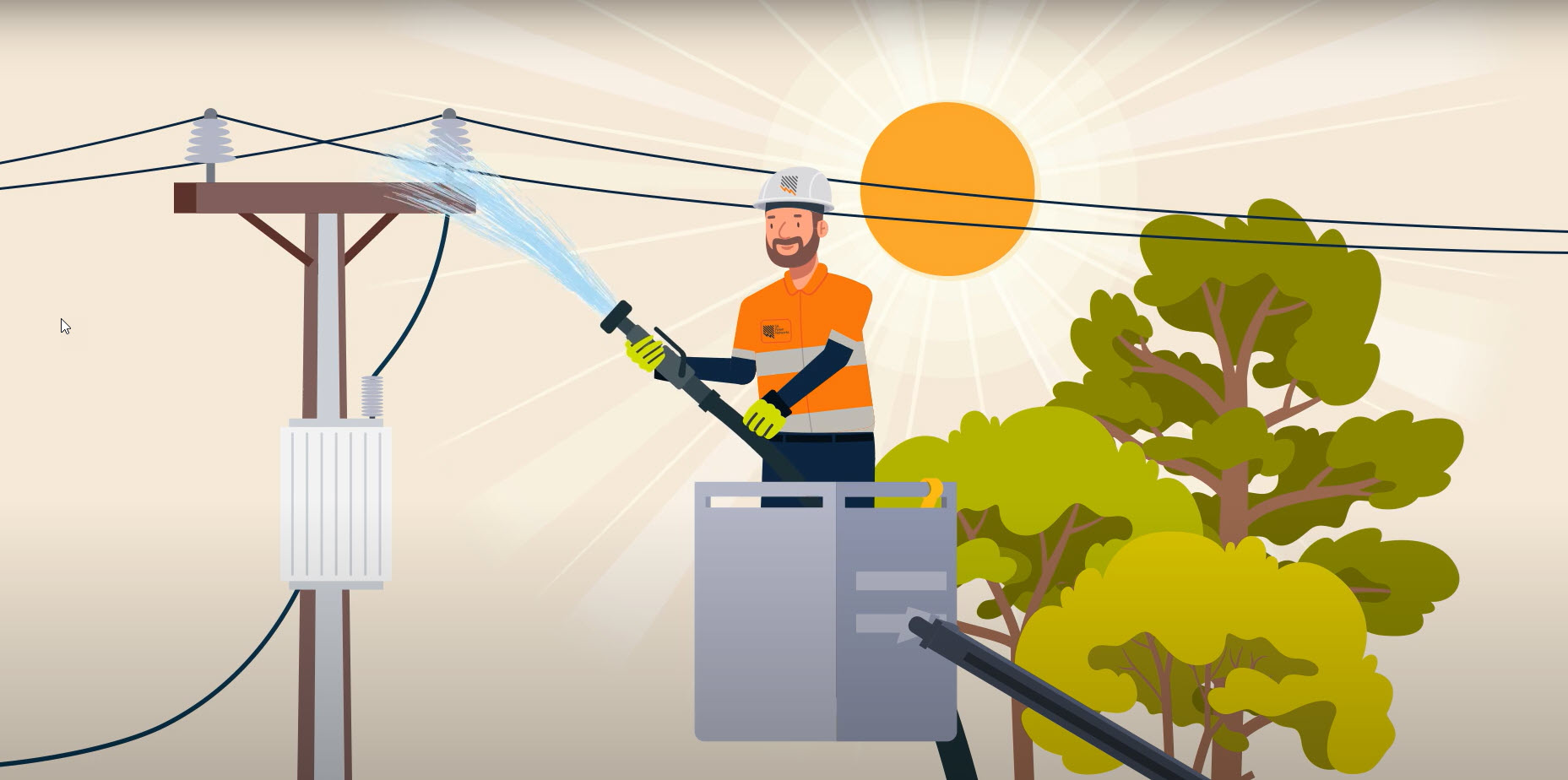
Video - Insulator pollution explained